Freiheits-Marsch, Op. 226
Ferdinandus-Walzer, Op. 10 (arr. W. Dörner)
Ich bin die Christel von der Post (Der Vogelhändler)
Ohne Bremse!, Polka schnell Op. 238
Seid umschlungen, Millionen!, waltz Op. 443
Il bacio
Calling All Workers
Gaîté Parisienne: Suite (arr. M. Rosenthal)
O Dieu! Que de bijoux (Faust)
Sirenen-Lieder, Polka Mazur Op. 13 (arr. W. Dörner)
Københavns Jernbane Damp Galop / Kopenhagener Dampfeisenbahn-Galopp
The Sleeping Beauty, Op. 66: Waltz
Heia, heia, in den Bergen ist mein Heimatland (Die Csárdásfürstin)
Jokey-Polka, Polka schnell Op. 278
New Year’s Concert
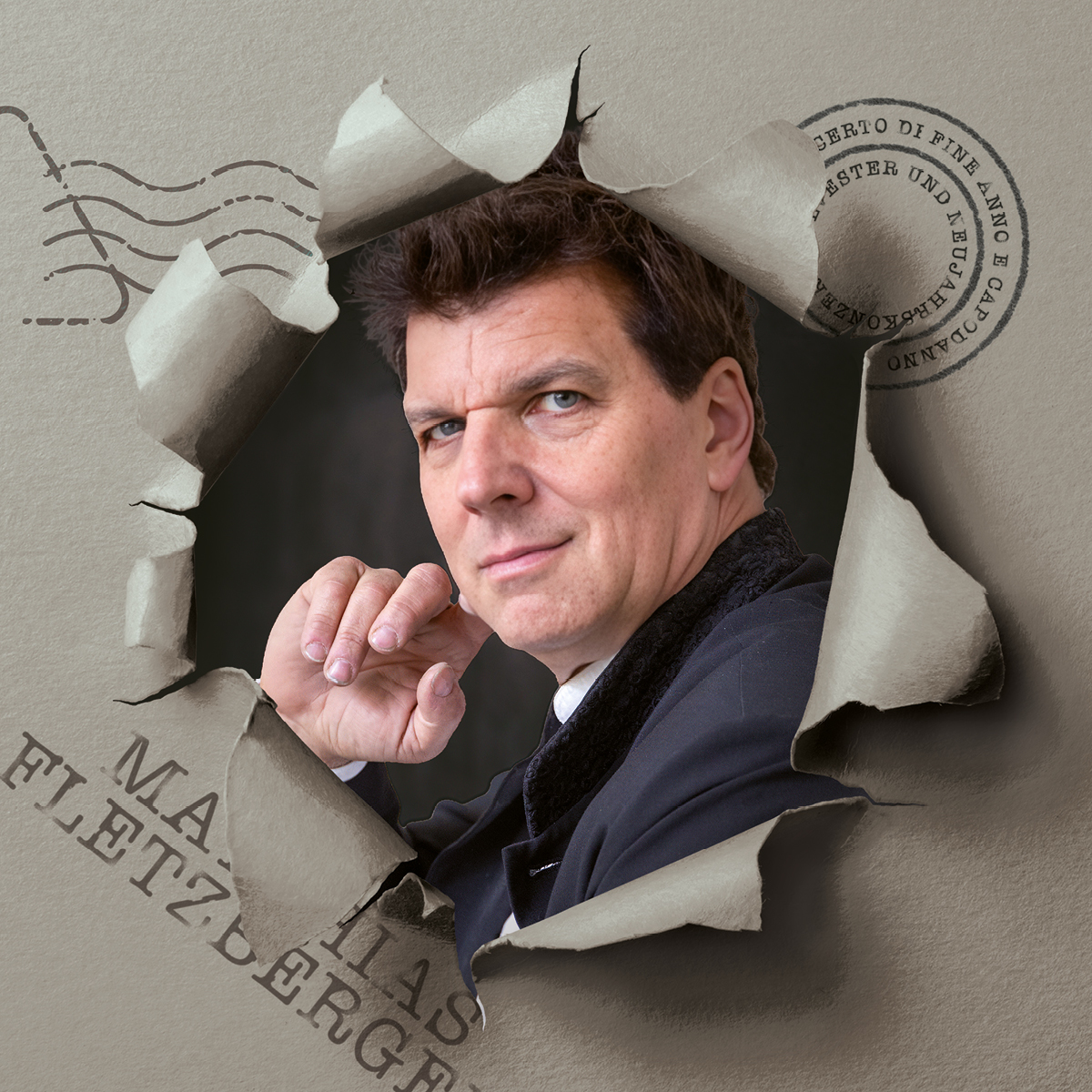
Matthias Fletzberger

What’s on
Cast
Conductor
Soprano
Orchestra
Description
“Seid umschlungen, Millionen!” – “Be embraced, you millions!”: the famous line from the Ode to Joy also finds its way, somewhat unexpectedly, into the world of other composers. In the late nineteenth century, Johann Strauss II chose it as the title of a waltz dedicated to Johannes Brahms: two seemingly distant musical worlds – those of the Waltz King and the guardian of the great symphonic tradition – brought together by genuine mutual admiration. At the work’s premiere, Brahms made no secret of his enthusiasm.
This encounter provides the starting point for a programme that brings together Europe’s diverse traditions and cultures in the spirit of an embrace: a gesture of closeness that, at the beginning of a new year, also becomes a wish for peace. Alongside the ever-popular dances and marches of the Strauss family, the programme features lesser-known gems from the Viennese repertoire and works by two female composers deserving of rediscovery: Constanze Geiger and Josephine Amann-Weinlich, both active in Vienna’s vibrant nineteenth-century musical scene.
From Vienna, the embrace extends across Europe, reaching Copenhagen, where an exhilarating galop by Hans Christian Lumbye celebrates the inauguration of Denmark’s first railway line. The journey then takes us to Britain in the 1940s with Calling All Workers, a march composed for the BBC radio programme Music While You Work: music designed to accompany factory workers through their day and lift their spirits.
Italy, too, has its place in this musical journey, with Luigi Arditi’s hugely popular Il bacio: an aria in which the voice moves with the lightness and rhythmic vitality of a dance. Offenbach’s Gaîté Parisienne will conjure up a glittering Paris of nineteenth-century cafés, boulevards and lively entertainment venues, while Emmerich Kálmán will evoke an idealised, proud vision of Hungary’s mountainous landscapes.
And so, when we return to the Vienna of the Strauss family with the exuberant Jokey-Polka, we will do so with the thought that even the most cherished traditions can still hold unexpected encounters.
Find out more