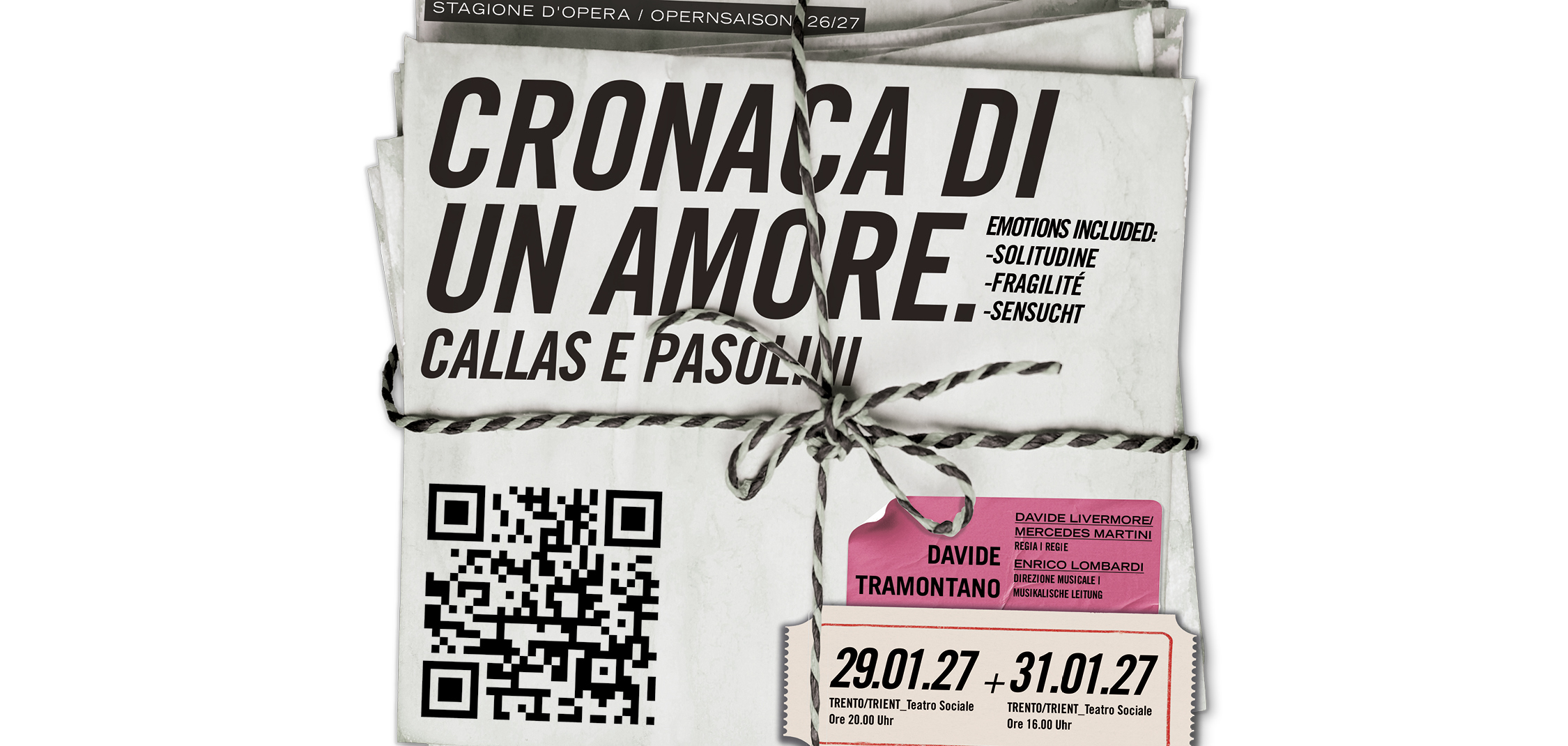
An impossible love, "perhaps improbable, most particular," writes Alberto Mattioli, "but undoubtedly love." This is what sparked on the set of Medea, in the summer of 1969, between two legendary figures of the twentieth century: Pier Paolo Pasolini and Maria Callas. An encounter between two solitudes: two extraordinary figures, utterly different yet alike, unable to conform to the rules of their time and united by a painful inner fragility. Both fresh from great romantic disappointments, the two forged an unexpected and hard-to-define bond, made of confidences, conversations, and long days shared between the film sets of Cappadocia and the Grado lagoon. An intense relationship, an intimacy that went beyond mere affection. This is confirmed by two rings the director gave her during filming: gestures that Maria interpreted as the promise of a future together, the concrete sign of a love finally made possible.
Cronaca di un amore. Callas e Pasolini, the new opera by Davide Tramontano, tells the story of this unique relationship through a dramaturgy that weaves together documents, testimonies, and imagination. The opera follows the days of filming Medea, the private dialogues, the misunderstandings, the hopes and illusions of la Divina and the poet-director. Around them move the specters of fame, desire, public judgment, and the difficulty of fully living one's feelings. What emerges is an intimate and human portrait of Callas and Pasolini, far from the icon and close to their most authentic vulnerability.